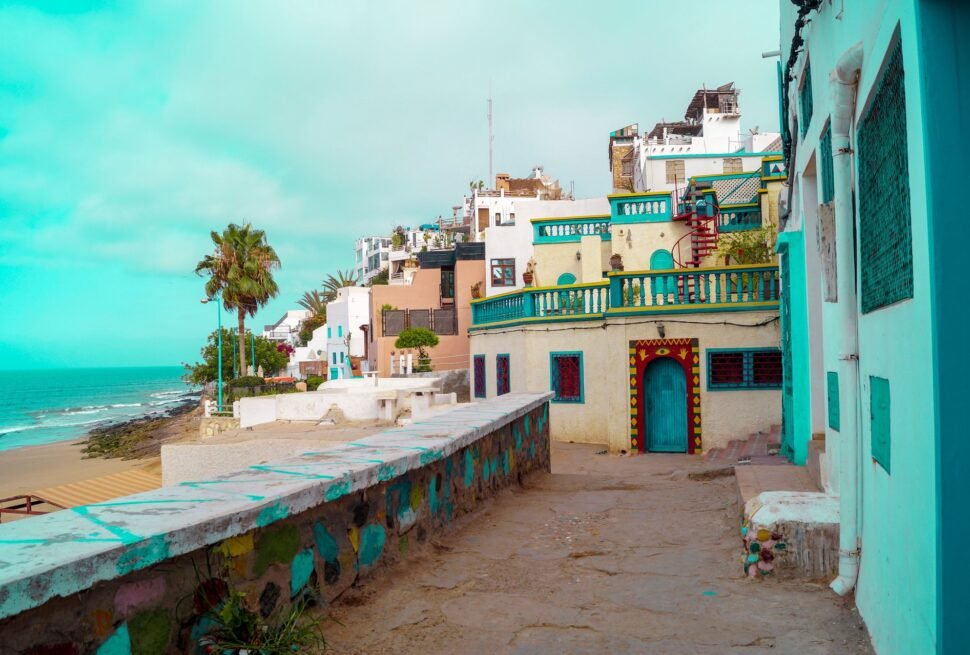
Essaouira is windy for much of the year, with the strongest and most reliable winds usually from late spring to late summer. That makes it a favourite with kitesurfers and windsurfers, and a challenge for anyone hoping to sunbathe. If you want calmer air for wandering the medina and the ramparts, autumn and winter are often gentler. Whatever the season, the town has plenty to do when the wind won’t cooperate.
Below we explain how Essaouira’s wind works, what to expect if you want to try kitesurfing or windsurfing, and how to plan good days whatever the weather.
Why Essaouira is so windy
Essaouira’s wind comes mainly from the trade winds, known locally by the French name alizé. These are steady winds from the north and north-east, blowing down Morocco’s Atlantic coast. Weather systems over the ocean and heating over the land both shape them. In the warmer months, the land heats up faster than the cool Atlantic, which strengthens the airflow along the coast.
The town sits on a wide, open bay with little high ground nearby to shelter it. So the wind arrives clean and steady. That is why Essaouira is sometimes called the “Wind City of Africa”, a nickname you will see on postcards and in shop windows.
The same wind has a pleasant side effect. It keeps Essaouira much cooler than inland Morocco in summer. When Marrakech is baking, the coast can feel almost chilly, especially in the evenings, so pack a jacket even in July.
Wind through the year
Conditions vary from year to year, so treat this as a general pattern rather than a promise:
| Season | Typical wind | Good for |
|---|---|---|
| Late spring (around April to May) | Picking up, often windy in the afternoons | Kite and windsurf sessions, walks |
| Summer (around June to August) | Strongest and most consistent, often blowing for days on end | Experienced kitesurfers and windsurfers, lessons in the bay |
| Early autumn (around September to October) | Easing, more varied | A balance of watersports and sightseeing |
| Winter (around November to March) | Generally lighter and more variable, with occasional storms and bigger Atlantic swell | Surfing, calm sightseeing, quieter streets |
Within a single day, the wind often builds from late morning and peaks in the afternoon. If you want a calm walk on the beach, the early morning is usually your best chance.
Kitesurfing and windsurfing basics
Why the bay suits learners
Essaouira’s main beach curves around a broad bay, with a long stretch of sand and plenty of space. The prevailing wind tends to blow along or slightly onto the shore rather than straight out to sea, which is generally considered safer for learning. Several kitesurf and windsurf centres operate along the beach and offer lessons and equipment hire.
We don’t recommend particular schools, but a few questions will help you choose well:
- Are the instructors certified by a recognised international kitesurfing or windsurfing organisation?
- Do lessons use radio helmets or one-to-one teaching, and what is the student-to-instructor ratio?
- Is safety equipment such as a helmet, impact vest and wetsuit included, and does it fit well?
- Is a rescue boat or jet ski on hand when students are in the water?
- Will they tell you honestly when conditions are too strong for your level?
What a beginner can expect
Kitesurfing takes longer to learn than many people expect. Beginners usually spend the first sessions on the sand learning to control a small trainer kite, then progress to body-dragging in the water, and only later try standing on the board. Spread over several days, a short course often gets learners to their first rides, but everyone progresses differently. Windsurfing can be quicker to start, especially on a large, stable beginner board, though strong summer winds can make the early stages tiring.
If you are new to watersports altogether, a gentler surf lesson elsewhere on the coast can be a good introduction. Our guide to surfing for beginners around Agadir explains how lessons usually work.
Safety and conditions
- The water is cool. The Atlantic here stays fresh even in summer because of upwelling along the coast. A full wetsuit is standard.
- Respect the zones. Kite and windsurf areas are usually separated from swimmers. Follow local guidance and any flags or signs.
- Mind the wind direction. On days when the wind turns offshore, conditions can be dangerous for less experienced riders. Listen to instructors.
- Check the forecast. Wind forecast apps and websites popular with kitesurfers give a good idea of the days ahead. Instructors on the beach will know local quirks better than any app.
Spots beyond the town beach
Experienced riders often head along the coast. Sidi Kaouki, a small village to the south, is popular for kitesurfing and surfing and has a wilder, more open feel. To the north, Moulay Bouzerktoune is known among advanced windsurfers for its wave sailing. Both are reached by road, and conditions there can be much more demanding than in the bay.
What to do on calm (or too-windy) days
Whether the wind has dropped to nothing or it is blowing too hard to enjoy the beach, Essaouira has plenty to fill a day.
Explore the medina and ramparts
Essaouira’s walled medina is a UNESCO World Heritage Site, laid out in the eighteenth century with help from European engineers. That is why its streets are straighter and easier to follow than in many Moroccan medinas. Walk the sea-facing ramparts, known as the Skala, where old cannons look out over the rocks, and explore the lanes of woodworkers who craft thuya wood into boxes and inlaid pieces.
Visit the fishing port
The port is lively in the morning when boats return. You will see blue fishing boats, nets being mended, gulls everywhere and fish being sorted and sold. The view back towards the ramparts is one of the classic images of the town. Keep out of the way of the work and ask before photographing people.
Look for the islands and their birds
Offshore lie the Mogador islands, a protected nature reserve. Access is generally restricted, so most people see them from the shore. They are known as a breeding site for Eleonora’s falcons, which you may spot from the coast in the warmer months with binoculars.
Discover the town’s layered heritage
Essaouira, once known as Mogador, has a rich history of Muslim, Jewish and European trading communities. Walk through the Mellah, the old Jewish quarter, and look for the traces of that shared past in its architecture. Music is also part of the town’s identity, particularly Gnaoua music, which has spiritual roots and is celebrated at a well-known festival usually held in early summer. Check dates locally.
Head into the argan country
The countryside inland from Essaouira is dotted with argan trees. Women’s cooperatives in the region produce argan oil, and some welcome visitors. Our argan oil guide explains how the oil is made and how to recognise good quality.
Walk to Diabat
South of the town beach, a long walk along the sand, or a short drive, brings you to the village of Diabat, with dunes and a quieter atmosphere. On windy days, the walk can be bracing and very beautiful.
Choosing your season
- For kitesurfing and windsurfing: late spring to early autumn, with summer usually the most consistent.
- For sightseeing and calm beach walks: autumn and winter often bring lighter winds and fewer crowds, with mild days.
- For a mix: September and October can offer a bit of both.
If you are visiting from Agadir, Essaouira works as a long day trip or, better, an overnight stay. Our Essaouira day trip guide covers how to get there and what to prioritise. For a longer journey up the coast, see our Morocco Atlantic coast road trip.
Frequently asked questions
Is Essaouira too windy for a beach holiday?
For sunbathing, it can be, especially in summer afternoons. Essaouira is better thought of as a place for walks, watersports and culture than a lounging beach resort. Sheltered spots and early mornings help.
Can complete beginners learn to kitesurf in Essaouira?
Yes. The wide bay and steady wind make it a common place to learn. Choose a centre with certified instructors and good safety cover, and allow several sessions.
When is the wind calmest?
Generally in the autumn and winter months, and in the early mornings throughout the year. Conditions vary, so check a wind forecast before you plan around it.
Is the sea warm enough to swim?
The water is cool all year, and the wind makes it feel colder. Many visitors paddle rather than swim. Watersports enthusiasts wear wetsuits.
Plan your trip
Our Essaouira travel guide explores the medina, the port, the coast and the town’s music and food in more depth, with practical advice for every season. If you are combining Essaouira with the south, our Agadir travel guide covers the beaches and countryside of the Souss region.
This article was written with the assistance of artificial intelligence, and was reviewed and edited by Yassine. How the guides are written and checked