Shopping in a Moroccan souk is an experience in itself. Colourful stalls, the smell of spices and leather, and sellers inviting you to “just look” can be exciting, and a little overwhelming the first time. Bargaining is part of the culture, and once you understand how it works, it becomes a friendly game rather than a source of stress.
When to bargain, and when not to
- Bargain for: handicrafts, carpets, leather goods, lamps, jewellery, clothes and souvenirs in markets and small shops.
- Do not bargain for: food in supermarkets, bread, everyday items with marked prices, restaurant meals, or in fixed-price shops and cooperatives with labels.
- Taxis: petit taxis in cities should use the meter. For grand taxis and longer rides, agree on the price before getting in.
Step by step
1. Look around first
Walk through the souk and see similar items in several shops before buying anything. This gives you an idea of quality and price.
2. Decide what it is worth to you
Before asking the price, decide how much you would be happy to pay. This is your real limit, whatever the seller says.
3. Let the seller start
Ask the price and let the seller give the first number. The first price for visitors is often well above the final one, but there is no fixed rule.
4. Make a counter-offer
Offer a lower price, calmly and with a smile. Do not offer a price you are not prepared to pay; if the seller accepts, you should buy.
5. Meet in the middle
The seller will come down and you go up step by step. Talking about the quality, buying several items or paying in cash can help.
6. Be ready to walk away
If you cannot agree, thank the seller and leave politely. Sometimes the seller will call you back with a better price; sometimes not, and that is fine too.
Good habits
- Stay friendly. Humour and patience work better than being tough.
- Do not start if you are not interested. Asking the price can be seen as the start of a negotiation.
- Carry small notes. It is hard to argue a good price and then ask for change from a large note.
- Remember the value. A small difference may matter more to an artisan than to you. Aim for a fair price, not the lowest possible one.
- Check quality: look at stitching, finishes and materials before agreeing.
Handling pressure
In busy souks, you may be approached by sellers or by people offering to guide you. A clear but polite “la, shukran” (no, thank you) and continuing to walk is usually enough. If you want a guide, use an official one or book a tour.
Where to practise
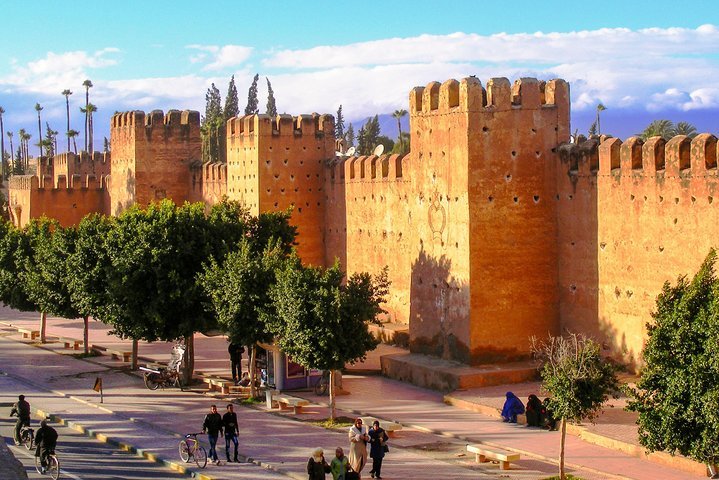
Agadir’s Souk El Had is a relaxed place to start, with many local shoppers. The souks of Taroudant are calm and authentic, while those of Marrakech are the most famous and the most intense. For silver, head to Tiznit.