A riad is a traditional Moroccan townhouse built around an inner courtyard or garden, usually hidden behind a plain wall in the old medina. Today many have been restored as small guesthouses, and staying in one is often the most memorable part of a trip to Marrakech, Fes or Essaouira. They are atmospheric and personal, but they are not for everyone: stairs, noise, heating and location all matter. This guide explains what a riad is, where the idea came from, and how to choose one that suits you.
What exactly is a riad?
Strictly speaking, the word riad comes from the Arabic for garden, and a true riad has a garden courtyard, traditionally divided into four planted sections around a central fountain or basin. A similar house with a paved courtyard and no garden is properly called a dar. In everyday use, though, almost any traditional courtyard house offering rooms to guests is called a riad, and you will see both words used for very similar places.
The defining feature is that the house looks inwards. From the alley you may see only a heavy wooden door in a blank wall. Step through, usually along a short bent passage that blocks the view from the street, and the house opens up into a bright courtyard with rooms arranged on two or three floors around it, and often a roof terrace above.
Typical features
- The courtyard: the heart of the house, sometimes with orange or lemon trees, a fountain or a small plunge pool.
- Galleries: upper floors open onto balconies running around the courtyard, so many rooms have windows facing inwards rather than to the street.
- Zellige: intricate tilework made from hand-cut glazed pieces, often on floors, fountains and lower walls.
- Carved plaster and cedar wood: delicate stucco and painted or carved ceilings, especially in Fes.
- Tadelakt: a smooth, polished lime plaster, much used in bathrooms, originally associated with Marrakech.
- The roof terrace: a place for breakfast, sunbathing or watching the sun set over the rooftops and minarets.
A short history
Courtyard houses have a long history across the Mediterranean and the Islamic world, and in Morocco they suited both the climate and family life. Thick walls kept rooms cool in summer, the open courtyard drew air and light into the centre of the building, and the inward design gave privacy to the household, which was an important value in traditional urban society. Wealthier families built larger houses with grander gardens; most townspeople lived in more modest versions.
During the twentieth century many families moved out of the medinas into newer districts with cars and modern plumbing, and a lot of old houses fell into disrepair. From around the late twentieth century onwards, Moroccans and foreigners began buying and restoring them, and the guesthouse riad as we know it today was born. Marrakech led the way, followed by Fes, Essaouira and many smaller towns. Restoration has saved a great deal of heritage, though it has also raised debates about rising property values and changing neighbourhoods in the medinas.
The pros of staying in a riad
- Atmosphere. Waking up to birdsong in a tiled courtyard is hard to beat, and the contrast between the busy lanes and the quiet inside is part of the magic.
- Personal service. With only a handful of rooms, staff tend to know your name, help with directions and share honest local advice.
- Location. Being inside the medina means monuments, souks and food stalls are on your doorstep.
- Breakfast. Many riads serve generous Moroccan breakfasts, with breads, pancakes, honey, olive oil and fresh juice.
- A sense of place. You are staying in a piece of living architecture rather than a generic hotel room.
The cons to think about
- Stairs. Riads almost never have lifts, and the staircases are often steep and narrow. Upper rooms can mean several flights.
- Sound travels. Because rooms open onto a shared courtyard, voices, doors and early breakfasts can carry. Calls to prayer from nearby mosques are also part of medina life.
- Light and windows. Rooms facing inwards may have limited natural light or small windows, particularly on the ground floor.
- Temperature. Thick walls help in summer, but in winter riads can feel chilly and damp, especially in Fes and the mountains.
- Access. Cars cannot enter most medina lanes, so you may need to walk the last stretch with luggage, sometimes helped by a porter with a handcart.
- Finding it. On your first evening the route through unlit alleys can be confusing.
How to choose the right riad
Location within the medina
Not every part of the medina is equal. A riad near a main entrance gate or a car-accessible street is far easier to reach, especially if you arrive late or have heavy bags. A house deep in the residential lanes may be quieter and more authentic, but harder to find. Look at a map before you book and check how far it is from the nearest point a taxi can reach.
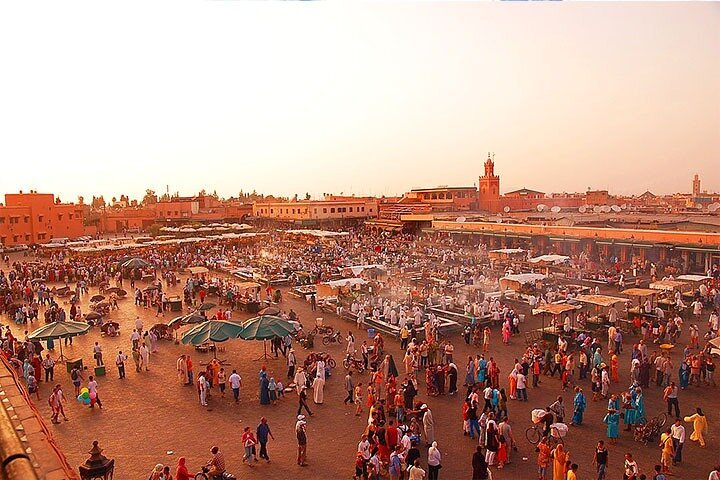
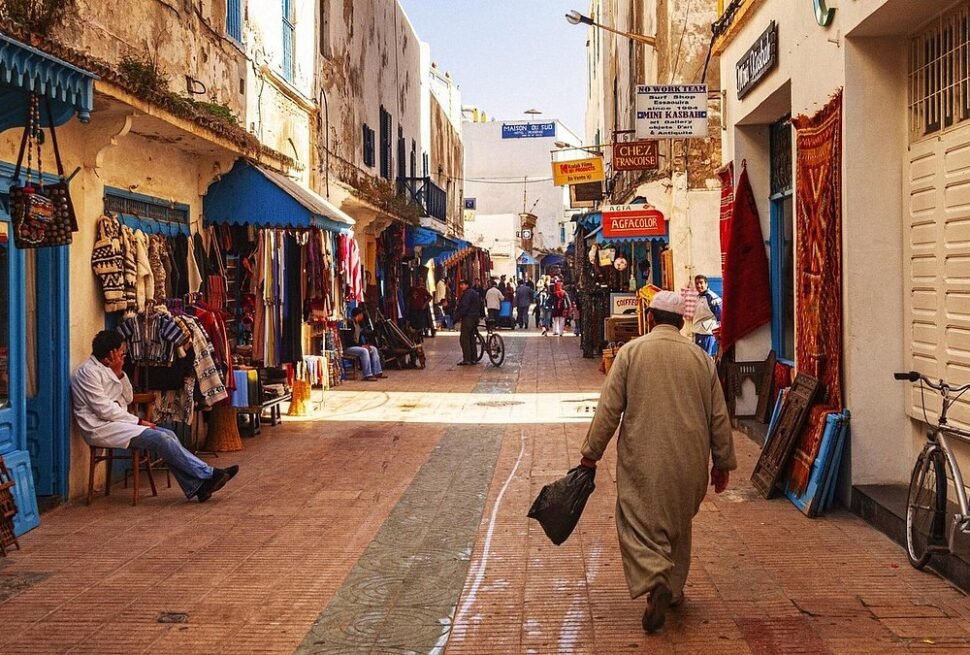
Each city has its own character. In Marrakech, areas close to Jemaa el-Fna are lively and convenient but can be noisy, while quieter quarters further north or around the Kasbah feel more residential. In Fes, the medina is huge and steep, so whether you stay near the upper gates or lower down near the river changes your daily walking considerably. In Essaouira, the walled medina is compact and easy to navigate, and many riads sit close to the ramparts and the sea. Chefchaouen is built on a hillside, so a house high up means views but also climbing.
Stairs and accessibility
If anyone in your group has limited mobility, ask specifically about a ground-floor room and the number of steps from the entrance. Some riads have a step or two even at the door. Be aware that medina lanes themselves can be uneven, sloping or stepped.
Noise
Ask which rooms are quietest. Rooms on upper floors, away from the kitchen and breakfast area, are often calmer. Light sleepers should pack earplugs regardless.
Heating and cooling
In winter, check that rooms have proper heating, not just a blanket, and ask whether the courtyard is covered or open to the sky. In summer, particularly in Marrakech and Fes, air conditioning or at least good ventilation and a plunge pool make a real difference. Our article on the best time to visit Morocco by region explains when each city tends to be hottest and coldest.
Size and style
Riads range from three or four simple rooms run by a family to elegant houses with a pool, spa and restaurant. Smaller houses feel more intimate; larger ones offer more privacy and facilities. Neither is better, it depends on what you want.
Questions to ask before booking
- How do I reach the riad from the nearest taxi drop-off, and can someone meet me there?
- Which floor is my room on, and how many stairs are there?
- Does the room have a window, and does it face the courtyard or outside?
- Is there heating and air conditioning in the room?
- Is the courtyard covered in bad weather?
- Is breakfast included, and can you serve dinner if we arrive late?
- Do you accept card payment, or should I bring cash?
- Is there a mosque or a busy café immediately next door?
A clear, friendly reply is itself a good sign. Riads that answer questions honestly tend to look after guests well.
Riad etiquette
A riad is often closer to a home than a hotel. Keep voices down in the courtyard late at night, since sound rises to every room. Dress modestly when walking through the medina to and from the house; our guide on what to wear in Morocco has practical suggestions. If you take a meal on the terrace, it is usually polite to let staff know in good time, as dishes such as tagine are cooked slowly. And if you would like a traditional bathing experience during your stay, our Moroccan hammam guide explains what to expect, whether at a riad spa or a neighbourhood hammam.
Riad or hotel?
For a first visit to Marrakech or Fes, many travellers love at least two or three nights in a riad. If you need step-free access, want a large pool for children, or prefer modern facilities and parking, a hotel in the new town or on the city outskirts may suit you better, and you can still spend your days in the medina. Some visitors split their stay: a riad for the old city, then a resort or beach hotel to unwind. Agadir, by contrast, is a modern seaside city rebuilt after the 1960 earthquake, so most accommodation there is hotel-style rather than riad.
Frequently asked questions
Are riads safe?
Generally, yes. The front door is usually locked or staffed, and the inward-facing design means there are few accessible windows. As anywhere, use the room safe for valuables.
Are riads suitable for children?
Many welcome families, but open courtyards, plunge pools and steep stairs need supervision with small children. Ask about family rooms and whether the pool is fenced or covered.
Do riads have private bathrooms?
Most restored guesthouse riads have en-suite bathrooms, though in older or simpler houses this is worth confirming.
What is the difference between a riad and a kasbah?
A riad is an urban courtyard house. A kasbah is a fortified earthen building, typically found in the south and the valleys beyond the Atlas, and some have also been turned into guesthouses.
Plan your trip
Our destination guides explain each medina’s layout and its quieter and livelier quarters, which makes choosing where to stay much easier. Take a look at the Marrakech travel guide, the Fes travel guide, the Essaouira travel guide and the Chefchaouen travel guide, all part of our Morocco travel library.
This article was written with the assistance of artificial intelligence, and was reviewed and edited by the Enjoy Agadir Trip team. How we write and check our guides