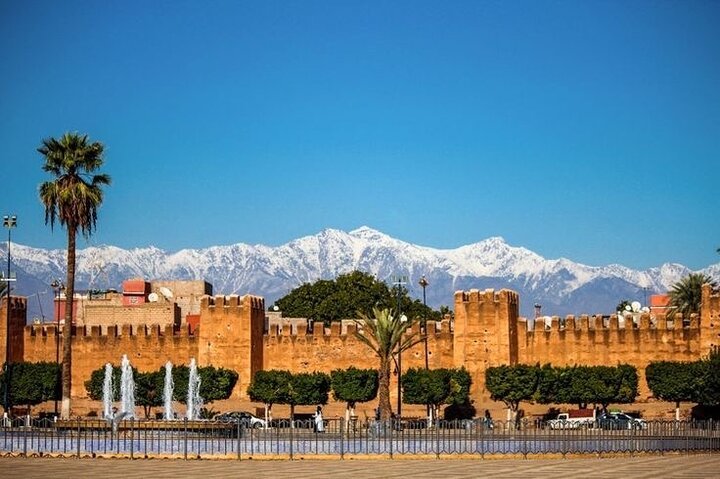
Rabat deserves two full days because its best sights are spread across several distinct quarters, and each one rewards a slow visit rather than a quick tick on a list. In two days you can walk the Kasbah of the Udayas and the medina, stand among the columns beside the Hassan Tower, wander the ruins and gardens of the Chellah, and still cross the river to Salé by tram or by small boat. Rush it in a single afternoon and you will see the monuments but miss what makes the capital special: its calm, its greenery and its easy, unhurried rhythm.
Many travellers skip Rabat on the way between Casablanca and Fes, assuming a capital city will be all ministries and traffic. Our team often recommends the opposite approach. Rabat is one of the most relaxed cities in Morocco, with clean tram lines, wide boulevards, a compact medina where hassle is rare and an Atlantic shoreline right on the doorstep. It is a gentle introduction to the country, and a restful pause in a busy itinerary.
Why Rabat feels different
Rabat sits at the mouth of the Bou Regreg river, facing its old rival Salé on the opposite bank. The city has been a royal capital several times in its long history, and the modern centre was laid out in the early twentieth century with broad avenues, public gardens and buildings that blend European and Moroccan styles. In 2012, a large part of the city, including the modern centre and several historic sites, was inscribed on the UNESCO World Heritage List as a capital shaped by both its past and its twentieth-century planning.
The practical result for visitors is a city that is easy to walk and easy to read. The main sights sit within a few kilometres of each other, the tram links both banks of the river, and the pace of street life is noticeably slower than in Marrakech or Fes. Shopkeepers in the medina tend to let you browse, and you can sit on a café terrace for an hour without anyone hurrying you along.
Day one: the Kasbah, the medina and the riverfront
The Kasbah of the Udayas
Start your first morning at the Kasbah of the Udayas, the fortified quarter perched on a rocky bluff where the river meets the ocean. You enter through a monumental carved gateway, one of the finest pieces of medieval stonework in the country, and then step into a maze of narrow lanes painted white and blue.
Walk to the end of the main lane and you reach a broad terrace overlooking the river mouth, Salé and the beach below. It is one of the best viewpoints in Rabat, especially in the soft morning light before the day gets busy. Below the walls, a walled Andalusian-style garden offers shade, orange trees and a quieter corner to rest. Wear comfortable shoes: the lanes are steep in places and the cobbles can be slippery.
The medina
From the Kasbah it is a short walk into the medina, which is small, flat and laid out on a much clearer grid than the older medinas of the interior. Rue des Consuls, once home to foreign diplomats and merchants, is the best street for browsing carpets, leatherwork, embroidered textiles and brass. The central market streets are more everyday, with fruit, spices, household goods and the snack stalls where locals stop for a quick bite.
Because Rabat sees fewer tourists than Marrakech, bargaining is usually gentler and more good-humoured. If you want a refresher on the etiquette, our guide on how to bargain in Moroccan souks covers the basics. Dress respectfully, as you would anywhere in a traditional neighbourhood, and ask before photographing people.
The riverfront and the corniche
In the late afternoon, follow the river path below the medina walls. The redeveloped waterfront along the Bou Regreg is a favourite place for families to stroll, and it gives you a clear view of Salé and the striking modern architecture that has risen along the river in recent years. If the weather is fine, continue towards the ocean side of the Kasbah and watch the sunset over the Atlantic, with surfers still in the water and fishermen on the rocks.
Day two: Hassan Tower, the Chellah and the modern city
The Hassan Tower and the Mausoleum of Mohammed V
Begin your second day at Rabat’s most famous landmark. The Hassan Tower is the unfinished minaret of a mosque begun in the late twelfth century under the Almohad sultan Yacoub al-Mansour. The project was intended to be one of the largest mosques in the world, but it was abandoned after the sultan’s death. Today the massive tower stands beside a field of broken columns, a haunting reminder of the scale of the original plan.
Facing the tower across the esplanade is the Mausoleum of Mohammed V, the resting place of the king who led Morocco to independence, and of his two sons, King Hassan II and Prince Moulay Abdallah. The white marble building with its green tiled roof is guarded by royal guards in ceremonial uniform, often on horseback at the entrance. Visitors of all faiths are usually welcome to look inside from the gallery. Dress modestly, keep your voice low and follow any instructions from the guards.
The Chellah
Next, head to the Chellah, a walled site just outside the city centre where layers of history sit side by side. Within its gateway you will find the remains of a Roman town, later overlaid by a medieval necropolis built under the Marinid dynasty, with the ruins of a mosque, tombs, a minaret decorated with coloured tiles and pools that local tradition connects to fertility and good fortune. Storks nest on almost every high point, and their clattering calls are part of the experience.
The Chellah is a place to wander slowly, ideally in the morning or late afternoon when the light is warm and the gardens are at their most peaceful. The site has been renovated in recent years, with new paths and information panels, so access arrangements may have changed; check locally before you go.
The Ville Nouvelle
Spend the afternoon in the modern city. Avenue Mohammed V is the main spine, lined with arcaded buildings from the early twentieth century, the Parliament, and some fine Art Deco facades. Nearby, the National Archaeology Museum holds a notable collection of finds from Roman sites around Morocco, and the Mohammed VI Museum of Modern and Contemporary Art hosts changing exhibitions of Moroccan and international art. The Jardin d’Essais Botaniques, a historic botanical garden, makes a pleasant green break if you need shade.
Crossing to Salé by tram or boat
Salé is Rabat’s twin city on the north bank of the Bou Regreg, and it feels like a different world. Where Rabat is airy and official, Salé is more traditional, with a walled medina, an important Great Mosque and a medieval madrasa decorated with carved wood, stucco and tiles. Very few tourists linger here, which is exactly why it is worth an hour or two.
There are two easy ways across the river:
- The tram: Rabat’s tram network links the two cities across a bridge over the river. It is clean, frequent and simple to use, and the ride gives you good views of the Bou Regreg valley.
- The small boats: traditional rowing boats ferry passengers across the river from a landing below the medina walls. The crossing is short and charming, a glimpse of an older way of moving between the two cities. Service depends on the weather and the demand, so check on the day.
Once in Salé, walk from the river towards the medina gate and ask for the madrasa, which sits close to the Great Mosque. The streets around the old souks are workaday and authentic. Dress conservatively and be discreet with your camera; Salé is a lived-in city rather than a showpiece.
Practical tips for your visit
- Getting there: Rabat is well connected by train. ONCF services link it with Casablanca, Fes, Meknes and Marrakech, and the Al Boraq high-speed line makes Tangier a quick trip. Rabat Ville station is the most central stop. Our Morocco train travel guide explains how the network works.
- Getting around: walking covers most of the centre, the tram links key districts and Salé, and the city’s blue petit taxis are plentiful. Make sure the meter is running.
- Where to stay: staying inside or near the medina puts you close to the Kasbah and the river; the Ville Nouvelle is convenient for the station and the museums.
- When to go: Rabat’s Atlantic climate is mild most of the year. Spring and autumn are especially pleasant, and summer is cooler than inland cities. Winter brings some rain, so pack a light waterproof.
- Friday: many shops close around midday prayers, and some sites may change their arrangements on religious holidays. Check locally.
How Rabat fits into a wider trip
Rabat sits neatly between the Atlantic coast and the imperial cities of the interior. Many travellers combine it with a day in Casablanca, less than an hour away by train, before heading inland to Meknes and Fes. Others include Rabat on a coastal journey north towards Asilah and Tangier, as we describe in our Atlantic coast road trip from Agadir to Tangier. If you are heading north, Tangier is now close by high-speed train, which makes a Rabat-and-Tangier combination easy without a car.
Frequently asked questions
Is one day enough for Rabat?
One day lets you see the Kasbah of the Udayas, the Hassan Tower and the mausoleum, but you would have to rush the Chellah and skip Salé. Two days give you time for all of them and for the relaxed evenings that make the city enjoyable.
Is Rabat safe for first-time visitors?
Rabat is generally considered one of the calmest cities in Morocco. Normal precautions apply: watch your belongings in crowded places, use official taxis and avoid empty streets late at night.
Can non-Muslims enter mosques in Rabat?
As in most of Morocco, active mosques are generally closed to non-Muslims. The Hassan Tower esplanade, the mausoleum gallery and historic sites such as the Chellah and the Salé madrasa are open to all visitors.
Plan your trip
For detailed walking routes, neighbourhood guides and practical advice, our Rabat travel guide covers the capital and Salé in depth. If you are continuing up the coast, the Tangier travel guide is a natural companion, and you can browse every title in the Morocco travel library.
This article was written with the assistance of artificial intelligence, and was reviewed and edited by the Enjoy Agadir Trip team. How we write and check our guides